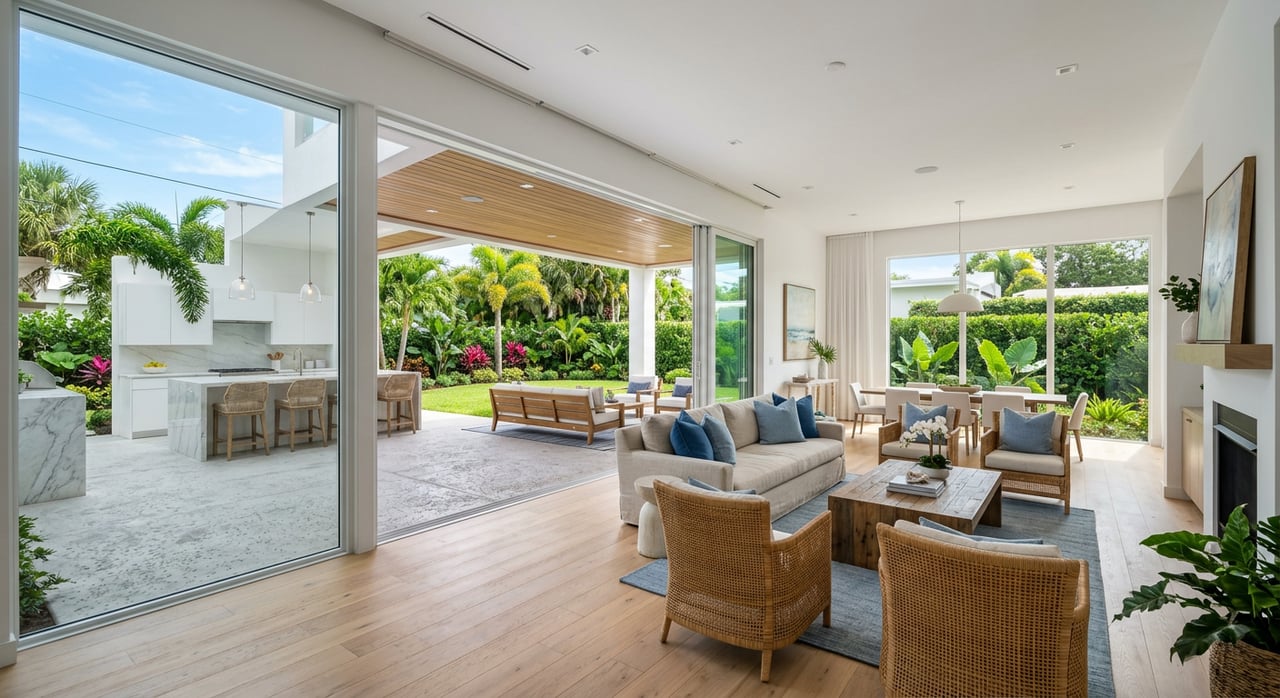
Fort Lauderdale Investment Property for Short-Term Rentals
March 24, 2026
March 24, 2026
Ever wondered if a Fort Lauderdale short-term or seasonal rental could help you enjoy the beach lifestyle while your property pays for itself? You are not alone. With strong winter demand and a diverse visitor base, the right home can perform well. In this guide, you will learn the rules you must follow, how to size up returns, and the steps to buy and operate with confidence. Let’s dive in.
Fort Lauderdale draws year-round visitors, with a clear upswing from late fall through spring. High season includes the winter holidays and early spring, and special events can create short demand spikes. Data vendors tracking the market often show an average daily rate in the roughly 200 to 300 dollar range and annual occupancy in the mid 50s to high 60s percent, depending on location and property type. You can review a market snapshot and then pull address-level comps for your target property using tools referenced by local pros like Airbtics’ Fort Lauderdale overview.
Inventory is competitive, so pricing, presentation, and amenities matter. When you compare comps, focus on bedrooms and baths, parking, pool, water access, and professional management status. Those factors, along with guest review scores and minimum-stay rules, tend to drive both rate and occupancy.
If you advertise a single-family home, duplex, triplex, fourplex, or condominium for stays of 30 days or less inside the City of Fort Lauderdale, you must register with the City’s Vacation Rental Program before operating. The current registration fee is 880 dollars per folio and it includes the first inspection. The City also lists a 100 dollar reinspection or no-show fee. Maximum occupancy for enforcement is two persons per bedroom. Start with the City’s checklist and timeline at the Fort Lauderdale Vacation Rental Registration page.
The City amended its ordinance in September 2023 to require a noise-level detection device and to increase civil penalties. Operating during a suspension can trigger significant daily fines. The City also requires a responsive local contact for 24/7 issues. Review the current rules and enforcement details on the City’s vacation rental portal.
Florida imposes a 6 percent state transient rental tax on stays of six months or less. This is handled through the Florida Department of Revenue. You can confirm the rule in Florida Statutes, Chapter 212.03. Broward County also levies a 6 percent Tourist Development Tax that owners are responsible to collect and remit. Registration and returns are managed by the County. Review rates and filing steps on the Broward Tourist Development Tax page.
Many short-term properties qualify as public lodging and need a Florida Department of Business & Professional Regulation (DBPR) vacation-rental license. Fort Lauderdale’s registration process typically asks for state and county documentation first, so confirm your category and steps early. Start with the DBPR vacation rental licensing guide.
Associations in Florida can restrict short-term rentals, and the rules for approving or amending rental limits differ between condominium and HOA statutes. Always obtain the recorded Declaration, amendments, budget, and minutes and read them closely. Some buildings that allow broad nightly rentals can be treated as non-warrantable for conventional financing. You can review how warrantability works and why it matters in this local overview of warrantable vs. non-warrantable condos.
A simple underwriting approach keeps you grounded:
Using market ranges, if a property sustains an ADR of 250 dollars and 60 percent occupancy, gross revenue would be about 54,750 dollars before expenses. From there, model management fees, utilities, HOA dues, supplies, maintenance, insurance, reserves, and platform fees to estimate NOI. Many full-service managers in this market charge about 18 to 30 percent of gross revenue depending on what is included. You can confirm typical fee ranges in this industry summary of short-term rental management fees. Cleaning costs are often charged to guests, but if owner-paid, plan on about 75 to 200 dollars per turnover based on unit size and service level, as outlined in this overview of short-term rental operating costs.
Cap rates for coastal vacation markets often land in the mid single digits because purchase prices are higher. When you evaluate a purchase, use conservative ADR and occupancy, include a healthy reserve, and calculate an unlevered cap rate by dividing NOI by your purchase price. That gives you a clean apples-to-apples number to compare across properties and financing options.
Conventional loans may recognize some rental income, but lenders often treat projected short-term income conservatively and require reserves. Condo projects that permit frequent short-term rentals can be labeled non-warrantable, which limits conventional options and may push you to larger down payments or higher rates. DSCR and portfolio loans are common for pure investors. These programs qualify based on the property’s cash flow and often require about 20 to 25 percent down, with DSCR thresholds typically ranging from 1.0 to 1.35 or higher. Verify your lending path early and confirm whether your target condo is warrantable to avoid surprises near closing. For local context on condo financing constraints, revisit the warrantable vs. non-warrantable guide.
Follow this sequence to reduce risk and improve outcomes.
Within the Fort Lauderdale area, comps should be hyper-local. When you build your set, match on bedroom count, parking, pool, water access, and professional management. These are common drivers of both rate and occupancy in local data sets that track performance. For a starting point on what to gather per comp, see the metrics referenced in the Airbtics city snapshot.
Buying a short-term or seasonal rental in Fort Lauderdale rewards careful planning. When you verify the rules, underwrite with real comps, and set up strong operations, you give yourself room to weather seasonality and still protect returns. If you want a hands-on advisor who blends luxury residential expertise with commercial underwriting, reach out to Karen Johnson. You will get senior-level guidance from first tour to first booking, plus local connections for management, insurance, and financing.
Stay up to date on the latest real estate trends.


Get assistance in determining the current property value, crafting a competitive offer, writing and negotiating a contract, and much more. Contact me today.